I don't teach about horses, the horses do the teaching...if only we would listen to them.

Donna DeNoble
Sunday, February 3, 2008

WALKING HORSES, BIOMECHANICS, THE STEPPING PACE
THE SPIRIT OF DRESSAGE by Lee Ziegler, copyright Jan. 1997
Excerpt: WHAT IS THE TRUE SPIRIT OF DRESSAGE?
Contrary to popular belief, dressage is not about riding tests and doing abstruse movements on huge horses in fancy clothes. Dressage started as a very practical, scientific, methodical training regimen to produce sound, supple, responsive horses for use in war, then later in spectacles called carrousels. Eventually, it evolved into an art, which our modern society was unable to grasp and replaced with sport, so we now pursue test-oriented training and have largely forgotten the origins of the discipline, or the art that it can be. (The art still survives in small enclaves in Portugal, France and Vienna, but the artists are not out riding tests.) Fortunately, we aren't training horses for war anymore, but the same methods that produced practical, useful horses for the battlefield can produce useful horses for everyday trail and show riding, whether the horses involved trot like the sport horses or not.
So, while we are not going to be riding dressage tests designed for trotters on our gaited horses, that does not mean that we don't want supple, sound, responsive horses. Most of the exercises developed for basic dressage work nicely for us, as long as we do them only in the ordinary and flat walk, not the running walk. (The running walk presents balance and flexibility problems in tight circles and lateral movements.) Circles work for us because they develop balance and strength in the back. Serpentines work for us because they develop flexibility. Spirals work for us, because of the balance and strength they develop. Shoulders-in work for us, again developing balance, strength in the hind quarters, and looseness in the shoulders, a very desirable trait in a Walker. Haunches-in work for us, developing flexibility through the body. Only after we have built up our horses through these basics, working on strengthening the back, haunches and shoulders do we really get the kind of stride lengthening we want, flowing out of a strong back. Dressage really works for Walkers, but apply the spirit, not the letter of modern "sport" Dressage. Use the exercises it includes to help your horse carry his body and your weight better, without sagging his back or making his vertebrae impinge, and he will stay sound. Use school figures and progressive training to condition your horse and he will be more supple, able to negotiate rough ground on a trail, or make the corners in an arena at speed without "hopping". Apply the aids and do the progressively more difficult figures of basic dressage and your horse will be more responsive, listening to you and doing what you ask. Dressage isn't about tests, it's about intelligent, biomechanically sound training for use. And it definitely is for Walking Horses.
http://www.walkinonranch.com/media/6_2007_MNFS_Rev_7-07.wmv
Excerpt: WHAT IS THE TRUE SPIRIT OF DRESSAGE?
Contrary to popular belief, dressage is not about riding tests and doing abstruse movements on huge horses in fancy clothes. Dressage started as a very practical, scientific, methodical training regimen to produce sound, supple, responsive horses for use in war, then later in spectacles called carrousels. Eventually, it evolved into an art, which our modern society was unable to grasp and replaced with sport, so we now pursue test-oriented training and have largely forgotten the origins of the discipline, or the art that it can be. (The art still survives in small enclaves in Portugal, France and Vienna, but the artists are not out riding tests.) Fortunately, we aren't training horses for war anymore, but the same methods that produced practical, useful horses for the battlefield can produce useful horses for everyday trail and show riding, whether the horses involved trot like the sport horses or not.
So, while we are not going to be riding dressage tests designed for trotters on our gaited horses, that does not mean that we don't want supple, sound, responsive horses. Most of the exercises developed for basic dressage work nicely for us, as long as we do them only in the ordinary and flat walk, not the running walk. (The running walk presents balance and flexibility problems in tight circles and lateral movements.) Circles work for us because they develop balance and strength in the back. Serpentines work for us because they develop flexibility. Spirals work for us, because of the balance and strength they develop. Shoulders-in work for us, again developing balance, strength in the hind quarters, and looseness in the shoulders, a very desirable trait in a Walker. Haunches-in work for us, developing flexibility through the body. Only after we have built up our horses through these basics, working on strengthening the back, haunches and shoulders do we really get the kind of stride lengthening we want, flowing out of a strong back. Dressage really works for Walkers, but apply the spirit, not the letter of modern "sport" Dressage. Use the exercises it includes to help your horse carry his body and your weight better, without sagging his back or making his vertebrae impinge, and he will stay sound. Use school figures and progressive training to condition your horse and he will be more supple, able to negotiate rough ground on a trail, or make the corners in an arena at speed without "hopping". Apply the aids and do the progressively more difficult figures of basic dressage and your horse will be more responsive, listening to you and doing what you ask. Dressage isn't about tests, it's about intelligent, biomechanically sound training for use. And it definitely is for Walking Horses.
http://www.walkinonranch.com/media/6_2007_MNFS_Rev_7-07.wmv
Paso Finos make Gaited Dressage history
Copyright (C) 2006 - AmericanPasoFinos.com
It is no wonder the Paso Fino horse excels at this event. Dressage (French for “training”) refers to training a horse to be thoroughly supple, balanced, and responsive. This discipline consists of the rider using both natural and artificial aids to guide the horse through different movements ranging from simple school figures (circles and serpentines) to difficult lateral movements (half pass, canter pirouettes, etc.). When competing in this discipline, progress at different levels is based on both the rider's and horse's experience. Preliminary is the lowest level of competition, where the horse must know how to do simple figures at walk, trot and canter. The highest level in the competition scene is Grand Prix Special, where the horse must do very difficult movements with what may appear little or no effort by the rider. It can take over 8 years for a professional to train a horse to Grand Prix level.
Depending on the level of competition, the horse and rider are judged by one judge or a panel of judges on three simple criteria: suppleness, balance and responsiveness. Without mastering these skills, it is almost impossible to obtain a score of 8-10 on your movement. The essence of dressage is harmony between horse and rider. The horse and rider must form ‘one'. Without harmony, dressage is simply another equestrian discipline, however when there is harmony, dressage is in and of itself an art form.
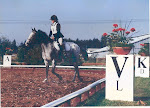
There are two sizes of arenas used: small and standard. The small arena is 20 m by 40 m, and is used for the lower levels of dressage and three-day eventing dressage. The standard arena is 20 m by 60 m, and is used for upper-level tests in both dressage and eventing. Dressage arenas have a lettering system around the outside in the following order (clockwise) A-K-E-H-C-M-B-F (small arena) and A-K-V-E-S-H-C-M-R-B-P-F (standard arena). It is currently unknown who began the lettering system or why the arrangement was chosen. At the start of the test, the horse enters at A. There is always a judge sitting at C (although for upper-level competition, there are up to five judges at different places around the arena). There are also invisible letters along the centerline, D-X-G (small arena) and D-L-X-I-G (standard arena), X always being in the center of the dressage arena. The dressage arena also has a centerline (from A to C, going through X in the middle), as well as two quarter-lines (halfway between the centerline and long sides of each arena).
In the traditional dressage tests for non-gaited horses, levels are progressive, building on the training of the horse. The training scale and the qualities needed by the horse are emphasized as it works its way up the different levels. A horse at the lowest level of dressage would not be judged on its collection (a more advanced concept), but more emphasis would be placed in judging that the basics are solid: the horse has impulsion, is moving forward, starting to come up through its back, and is accepting the rider's aids. More advanced tests will ask that the horse be supple, asking for maneuvers such as shoulder-in, haunches-in, and half-pass. The horse will also be asked to lengthen the walk, trot, and canter, preparing it for the move advanced movements of extended trot (which requires more impulsion than lengthened trot). The tests are designed to build upon each other. If shortcuts are take at the lower levels (for example, the horse is being forced into a frame with its head pulled into the vertical position, rather than correctly ridden up through its back into the bridle), the errors in training will become readily apparent in the upper levels.
Until recently, Paso Finos who competed in dressage were required to trot and canter. The main differences in traditional dressage and gaited dressage for the Paso Finos are that they are asked to execute a corto and largo in place of trot and canter. Recently, South Carolina hosted its first gaited Dressage classes with Paso Finos judged in Paso Fino gaits at Jasmine Farms Easter Show held on April 1, 2006. There were only two gaited classes, but the Paso Finos dominated both of them. There were a total of 11 entries in the 2 classes, Preliminary A and B. Ten of the entries were Paso Finos and one was a Kentucky Mountain Horse. Stella Manberg-Wise was the first to enter the arena that drizzly morning. She rode Angelica Del Reino, who is the VERY last Favorito Que Tal foal to be born and carries 7/8 Colombian-1/8 Cuban in breeding. She and Angelica rode to victory in this class and Michele Klawitter placed second on a Colombian Paso Fino mare also owned by Stella, Rita de Trebol. The B preliminary test was won by Mike Prevatt on a pure Puerto Rican gelding.
Stella Manberg-Wise is a respected breeder and trainer. She has judged not only PFHA shows, but also non-PFHA pointed shows including some in Puerto Rico. She felt the best part about showing dressage for her, was that competitors got their class sheet back with not only the score, but the judges' comments on each different section of the test. The cards held positive comments as well as what could have been improved upon. At the bottom of each card, overall comments by the judge were made. Each entrant received the score card. The judge at this particular event was very willing to talk to those who asked how to improve for next time.
Gaited dressage for Paso Fino enthusiasts is no longer on the horizon, but is becoming more of a reality every day. Strides are made with each dressage event that is held which includes classes for gaited horses and their riders. Jasmine Farms plans to hold 3 more events which feature gaited classes this show season. This year there will be both a high point award and year-end circuit award presented. The South Carolina Dressage and Combined Training Association will also be presenting a state-wide high point gaited award. The show held by Jasmine Farms was the first time South Carolina has recognized gaited dressage. Not only are the extra classes very popular with the exhibitors, but the Paso Finos themselves have been very popular among the spectators.
It is no wonder the Paso Fino horse excels at this event. Dressage (French for “training”) refers to training a horse to be thoroughly supple, balanced, and responsive. This discipline consists of the rider using both natural and artificial aids to guide the horse through different movements ranging from simple school figures (circles and serpentines) to difficult lateral movements (half pass, canter pirouettes, etc.). When competing in this discipline, progress at different levels is based on both the rider's and horse's experience. Preliminary is the lowest level of competition, where the horse must know how to do simple figures at walk, trot and canter. The highest level in the competition scene is Grand Prix Special, where the horse must do very difficult movements with what may appear little or no effort by the rider. It can take over 8 years for a professional to train a horse to Grand Prix level.
Depending on the level of competition, the horse and rider are judged by one judge or a panel of judges on three simple criteria: suppleness, balance and responsiveness. Without mastering these skills, it is almost impossible to obtain a score of 8-10 on your movement. The essence of dressage is harmony between horse and rider. The horse and rider must form ‘one'. Without harmony, dressage is simply another equestrian discipline, however when there is harmony, dressage is in and of itself an art form.
There are two sizes of arenas used: small and standard. The small arena is 20 m by 40 m, and is used for the lower levels of dressage and three-day eventing dressage. The standard arena is 20 m by 60 m, and is used for upper-level tests in both dressage and eventing. Dressage arenas have a lettering system around the outside in the following order (clockwise) A-K-E-H-C-M-B-F (small arena) and A-K-V-E-S-H-C-M-R-B-P-F (standard arena). It is currently unknown who began the lettering system or why the arrangement was chosen. At the start of the test, the horse enters at A. There is always a judge sitting at C (although for upper-level competition, there are up to five judges at different places around the arena). There are also invisible letters along the centerline, D-X-G (small arena) and D-L-X-I-G (standard arena), X always being in the center of the dressage arena. The dressage arena also has a centerline (from A to C, going through X in the middle), as well as two quarter-lines (halfway between the centerline and long sides of each arena).
In the traditional dressage tests for non-gaited horses, levels are progressive, building on the training of the horse. The training scale and the qualities needed by the horse are emphasized as it works its way up the different levels. A horse at the lowest level of dressage would not be judged on its collection (a more advanced concept), but more emphasis would be placed in judging that the basics are solid: the horse has impulsion, is moving forward, starting to come up through its back, and is accepting the rider's aids. More advanced tests will ask that the horse be supple, asking for maneuvers such as shoulder-in, haunches-in, and half-pass. The horse will also be asked to lengthen the walk, trot, and canter, preparing it for the move advanced movements of extended trot (which requires more impulsion than lengthened trot). The tests are designed to build upon each other. If shortcuts are take at the lower levels (for example, the horse is being forced into a frame with its head pulled into the vertical position, rather than correctly ridden up through its back into the bridle), the errors in training will become readily apparent in the upper levels.
Until recently, Paso Finos who competed in dressage were required to trot and canter. The main differences in traditional dressage and gaited dressage for the Paso Finos are that they are asked to execute a corto and largo in place of trot and canter. Recently, South Carolina hosted its first gaited Dressage classes with Paso Finos judged in Paso Fino gaits at Jasmine Farms Easter Show held on April 1, 2006. There were only two gaited classes, but the Paso Finos dominated both of them. There were a total of 11 entries in the 2 classes, Preliminary A and B. Ten of the entries were Paso Finos and one was a Kentucky Mountain Horse. Stella Manberg-Wise was the first to enter the arena that drizzly morning. She rode Angelica Del Reino, who is the VERY last Favorito Que Tal foal to be born and carries 7/8 Colombian-1/8 Cuban in breeding. She and Angelica rode to victory in this class and Michele Klawitter placed second on a Colombian Paso Fino mare also owned by Stella, Rita de Trebol. The B preliminary test was won by Mike Prevatt on a pure Puerto Rican gelding.
Stella Manberg-Wise is a respected breeder and trainer. She has judged not only PFHA shows, but also non-PFHA pointed shows including some in Puerto Rico. She felt the best part about showing dressage for her, was that competitors got their class sheet back with not only the score, but the judges' comments on each different section of the test. The cards held positive comments as well as what could have been improved upon. At the bottom of each card, overall comments by the judge were made. Each entrant received the score card. The judge at this particular event was very willing to talk to those who asked how to improve for next time.
Gaited dressage for Paso Fino enthusiasts is no longer on the horizon, but is becoming more of a reality every day. Strides are made with each dressage event that is held which includes classes for gaited horses and their riders. Jasmine Farms plans to hold 3 more events which feature gaited classes this show season. This year there will be both a high point award and year-end circuit award presented. The South Carolina Dressage and Combined Training Association will also be presenting a state-wide high point gaited award. The show held by Jasmine Farms was the first time South Carolina has recognized gaited dressage. Not only are the extra classes very popular with the exhibitors, but the Paso Finos themselves have been very popular among the spectators.
7th Annual Evergreen Gaited Horse Classic - July 19-20, 2008
http://www.nwgaitedhorse.com/eghc.htm
The Northwest Gaited Horse Club puts on an annual all breed gaited horse show in July called the Evergreen Gaited Horse Classic (EGHC). This is a fun, easy going, educational weekend whether you choose to participate or just watch!
Puyallup Fair & Event Center, Puyallup WA
Classes for: Icelandics, Mountain Horses, Peruvians, Paso Finos, Gaited Morgans, and Tennessee Walkers along with a variety of open classes that all gaited breeds can participate in. If you are new to showing we also have schooling classes for novice riders and/or horses to learn first hand from the judge on how to improve with your horse. There is something fun here for everyone! Only flat shod or barefoot horses accepted.
Gaited Horse Breed Demonstrations!
Don't miss our popular Saturday evening breed demonstrations to watch each gaited breed perform a 5 minute demo showcasing their talent and versatility. Please email us if you are interested in riding your gaited horse in a breed demo!
Show Forms
* Show premium
* Class list
* Entry form
* Sponsorship form
* Vendor application
* Show flyer
* Show results (2007)
* Show results (2006)
* Spectator admission is free!
* Visit our sponsors!
Problems opening these files? Click to install free Adobe Acrobat Reader
Install free acrobat reader
A Unique Horse Show
Come join the fun! Our show gives riders and spectators the opportunity to learn about gaited horses by integrating schooling classes right into the show schedule. Novices take part in the show alongside the more experienced entries, but they are given lots of help and encouragement along the way. At the end of each schooling class the riders get immediate feedback from the judge. Riders and spectators learn what the judge was looking for and why the class was placed as it was. As the show progresses, spectators can clearly see improvements as riders applied the suggestions they receive from the judge.
Great Awards/Prizes! Photographer and Videographer Services!
Exhibitors receive awards for first place, championships, and Best of Show. Volunteers also receive free t-shirts and gift cards! We have an exciting addition to our show this year. Along with our show photographer, Jay Goss, we have “Fossil Productions” taking video’s of each class! Just think, you can have a DVD of you and your horse to watch again and again for years to come. Be sure to visit Fossil Productions vendor booth to make arrangements for individual recordings in a class as it is first come first serve.
Cookie Lee Jewelry displayGreat Vendors!
The Northwest Gaited Horse Club puts on an annual all breed gaited horse show in July called the Evergreen Gaited Horse Classic (EGHC). This is a fun, easy going, educational weekend whether you choose to participate or just watch!
Puyallup Fair & Event Center, Puyallup WA
Classes for: Icelandics, Mountain Horses, Peruvians, Paso Finos, Gaited Morgans, and Tennessee Walkers along with a variety of open classes that all gaited breeds can participate in. If you are new to showing we also have schooling classes for novice riders and/or horses to learn first hand from the judge on how to improve with your horse. There is something fun here for everyone! Only flat shod or barefoot horses accepted.
Gaited Horse Breed Demonstrations!
Don't miss our popular Saturday evening breed demonstrations to watch each gaited breed perform a 5 minute demo showcasing their talent and versatility. Please email us if you are interested in riding your gaited horse in a breed demo!
Show Forms
* Show premium
* Class list
* Entry form
* Sponsorship form
* Vendor application
* Show flyer
* Show results (2007)
* Show results (2006)
* Spectator admission is free!
* Visit our sponsors!
Problems opening these files? Click to install free Adobe Acrobat Reader
Install free acrobat reader
A Unique Horse Show
Come join the fun! Our show gives riders and spectators the opportunity to learn about gaited horses by integrating schooling classes right into the show schedule. Novices take part in the show alongside the more experienced entries, but they are given lots of help and encouragement along the way. At the end of each schooling class the riders get immediate feedback from the judge. Riders and spectators learn what the judge was looking for and why the class was placed as it was. As the show progresses, spectators can clearly see improvements as riders applied the suggestions they receive from the judge.
Great Awards/Prizes! Photographer and Videographer Services!
Exhibitors receive awards for first place, championships, and Best of Show. Volunteers also receive free t-shirts and gift cards! We have an exciting addition to our show this year. Along with our show photographer, Jay Goss, we have “Fossil Productions” taking video’s of each class! Just think, you can have a DVD of you and your horse to watch again and again for years to come. Be sure to visit Fossil Productions vendor booth to make arrangements for individual recordings in a class as it is first come first serve.
Cookie Lee Jewelry displayGreat Vendors!
Friday, February 1, 2008
Second Life

So you want to be a riding teacher?
Thirty-five years ago a mother told a horse-crazy 17 year old that she had a choice--Attend "horse college" or go on to get an education for a "REAL JOB". She humored me...we visited Meredith Manor, and a few other schools that featured riding teacher certification.
Long story short, I chose Penn State for pre-veterinary and tried out for the Equestrian team as a compromise. I wanted a real job.
I have not regretted the choice for one moment, because I have a great career as a teacher, I have a sizable retirement account, health insurance, raised a child, owned a home and have a great trailer-pullin truck.
Teaching riding has been my second life. Starting in 1979 I hung out a shingle after receiving training from NARHA through the Centre County 4-H. I was a leader back then, and every 4-H in PA created a "Riding for the Handicaped" program. I was part of developing the Bellefonte program that I believe is still going today at Nancy Meier's farm.
We were sent to Hershey Medical Center several times to receive training about anatomy, physical disabilities, and how to teach every type of rider. I learned so much about how the human body is moved by the horse, and that served me well in my second life career as a horsemanship teacher.
Could I make a living at it? I tried it for 5 years...sorta
I leased a 40 acre facility with an indoor arena in the Pacific Northwest. My revenue stream was pretty good. With boarding, training, lessons and clinics, I ran about 5 thousand through the barn each month. The tradeoff was leaving my REAL JOB at 2:30, heading to the barn, (I did not live there) teaching lessons until 8 PM,feeding, riding training horses until 11 PM, rushing home to greet my child, eating (sometimes), grading papers, and falling into bed. At 4 AM I jumped back into the truck, drove 10 miles to the barn, fed the horses, did chores, headed home, showered, and made it to work on time(most days unless the elk knocked down the fence or the water was frozen or I had a sick horse) to teach school and do it all over again.
I never really shook the notion that my Mother planted in my head that horses were a hobby, or at most, an avocation. I had been afraid to quit my day job.
Now I am in grad school, and seriously contemplating doing horses full time. As soon as I work how how to put money away for another 20 years for retirement and carry my own health insurance...I have the time to plan and think...
After 9 months teaching riding locally again, the client load is increasing by the day. And it is WINTER!!! If I only had an indoor arena.
I am relating all this because many young people want to become riding teachers....
An earlier posting, "Old Wine in New Bottles" discussed life as a riding teacher without certification, yet possessing a lifetime of horse experience and 3o years riding/training and teaching riding. Would you rather take lessons from a newly certified 25 year old or from a career teacher with so much experience in many areas or horsemanship?
I guess it is the same thing as having the PhD and people taking you seriously as a teacher educator, vs. presenting a 30 year career teaching many subjects, teaching youth and teachers, and having no one value that experience. Book lernin' vs. field experience? Big dilemma.
So, what I am saying is, if you have any aspirations to become an equine business operator, there are so many things to consider...
Maybe this article by Faith Meredith will help you to evaluate your qualifications and aspirations. She discusses what to look for in a riding teacher. This article presents very valid points. The "Certificate" does not reveal the answers to all the questions you should ask yourself before choosing a riding teacher. But that is a whole other discussion.
Subscribe to:
Posts (Atom)